
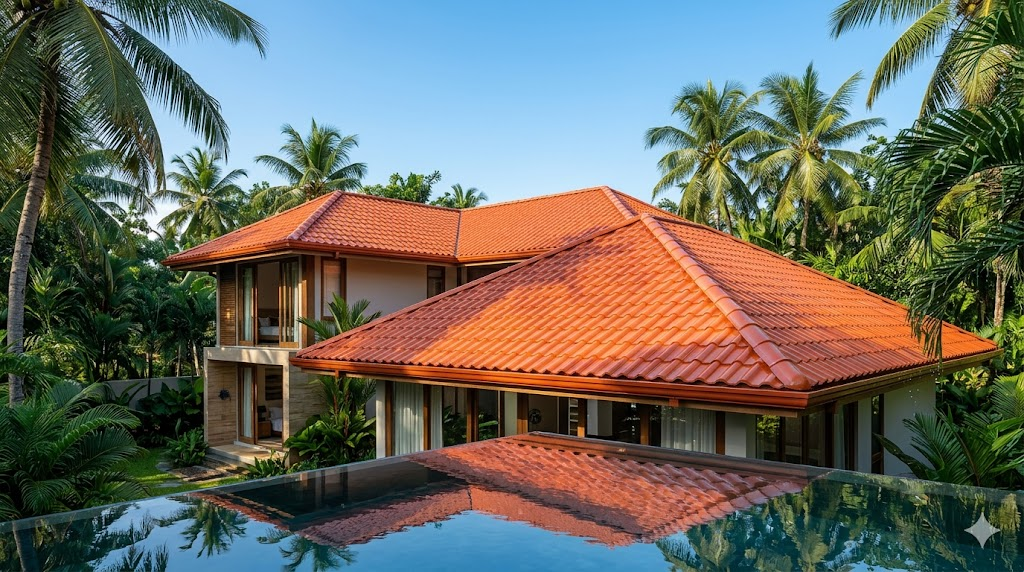
Sri Lanka’s enchanting tropical climate — warm sunshine, lush greenery, and rejuvenating monsoons — is a blessing for its people and biodiversity but a stern test for building materials, especially roofs. The roof is a home’s first line of defence against the elements, yet many traditional roofing materials fail to withstand the island’s relentless combination of sun, rain, wind, and salt air over the long term. At Idea Group, we have spent years researching and perfecting an alternative: UPVC roofing solutions, epitomised by our i‑ROOF brand. In this article, we delve into why UPVC roofing is not just a modern trend but a necessity for tropical living.
Understanding Tropical Roofing Challenges
A roof in Sri Lanka must endure a unique set of simultaneous stressors. During the inter‑monsoon and southwest monsoon periods (May to September), humidity levels often exceed 80%, and torrential downpours are frequent. Water ingress through cracked tiles or corroded metal sheets is one of the most common causes of ceiling collapse, mould growth, and electrical hazards. Prolonged exposure to intense UV radiation — especially at mid‑day — causes conventional materials to expand, contract, and eventually become brittle. In coastal regions, salt spray accelerates the corrosion of steel and aluminium sheets, reducing their lifespan by half compared to inland installations. Finally, in hill‑country areas, moss and lichen growth on porous surfaces such as clay tiles can trap moisture, leading to structural decay. Material that fails to address all these factors can impose a heavy financial and emotional toll through constant repairs and replacements.
Why UPVC Represents a Paradigm Shift
Unplasticized Polyvinyl Chloride (UPVC) is a rigid, chemically resistant polymer that has revolutionised the construction industry. When engineered into roofing profiles, as done by i‑ROOF, it offers a combination of properties that no single traditional material can match.
- Complete Waterproofing: Unlike clay tiles with overlapping joints that can be dislodged by strong winds, or corrugated metal sheets that rely on rubber washers and sealants (which degrade over time), UPVC roofing systems feature interlocking designs that create a monolithic, watertight shield. i‑ROOF’s precise tongue‑and‑groove profiles ensure that even in driving rain, not a drop penetrates the under‑roof space.
- Thermal Insulation and Energy Efficiency: UPVC has inherent insulating properties. Combined with the aerodynamic shape of i‑ROOF tiles that promotes air circulation beneath the tile, the roof acts as an effective thermal barrier. This reduces the transfer of solar heat into living spaces, keeping indoor temperatures noticeably cooler without air‑conditioning. For a typical Sri Lankan home, this can translate to significant electricity savings over the years.
- Unmatched Durability and Impact Resistance: i‑ROOF’s tiles are engineered with high‑impact modifiers that allow them to withstand hailstones, falling coconuts, and even foot traffic during installation or maintenance. Unlike clay, they will not crack under sudden shock; unlike metal, they will not dent or rust. The material is termite‑proof, fungus‑proof, and impervious to most chemicals, meaning it will not degrade biologically.
- Colour Permanence and Aesthetics: Traditional painted metal roofs fade and chalk within a few years, requiring expensive repainting. i‑ROOF tiles, especially the new ASA‑enhanced series, feature a co‑extruded colour layer that retains its vibrancy for decades. The Spanish‑style profile adds architectural character that enhances property value, while the availability of multiple colour options allows homeowners to match any exterior design scheme.
- Environmental Responsibility: i‑ROOF directly contributes to forest conservation by eliminating the need for timber rafters and purlins in the sub‑roof structure. The product itself is recyclable at the end of its long life. Idea Group’s manufacturing facility in Biyagama runs with a focus on waste minimisation and energy efficiency, adhering to strict environmental management practices.
Real‑Life Performance in Sri Lanka
Our experience with thousands of installations across the island — from luxury villas in Galle to state‑funded housing in Jaffna — proves that UPVC roofing systems hold up exceptionally well under real‑world conditions. Post‑installation surveys consistently report high satisfaction scores, particularly in noise reduction during rain, thermal comfort, and the absence of leaks. The i‑ROOF network of certified installers ensures that every roof is laid correctly, with proper ventilation and flashing details that further enhance performance.
Cost‑Effectiveness Over the Lifecycle
While the initial investment for a UPVC roof may be marginally higher than some entry‑level clay or metal alternatives, the total lifecycle cost is dramatically lower. When you factor in the elimination of recurring painting, replacement of broken tiles, pest control treatments, and timber structure maintenance, i‑ROOF pays for itself multiple times over a 20‑year period. Moreover, many insurance companies now offer lower premiums for homes with impact‑resistant, non‑combustible polymer roofing, adding another financial incentive.
For Sri Lankan homeowners who want a roof that offers safety, comfort, beauty, and sustainability without the endless cycle of repairs, UPVC is the definitive solution. i‑ROOF, backed by Idea Group’s 19‑year heritage and island‑wide support, stands ready to protect your most valuable asset — your home. Visit iroof.lk or your nearest I‑Factory Outlet to learn more.